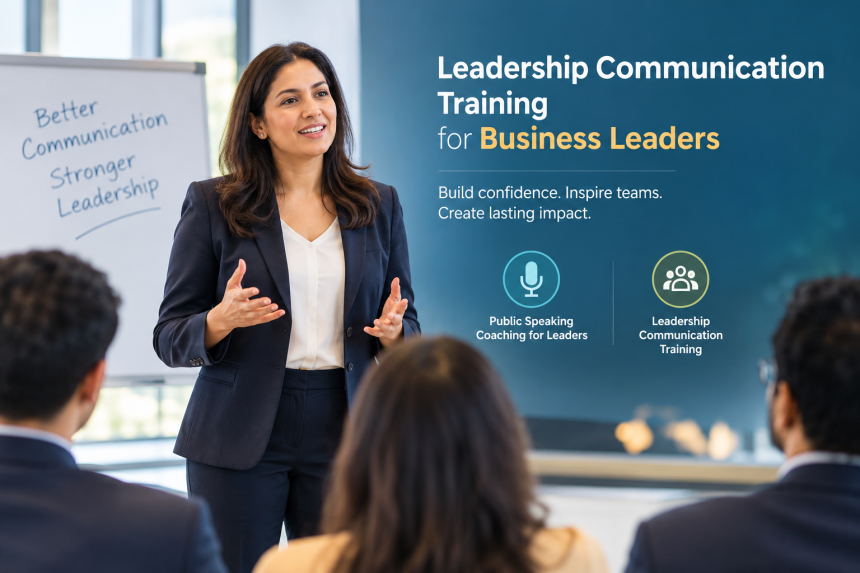
Public Speaking Coaching for Leaders: Why Leadership Communication Training Matters
- 13 Oct, 2026
- Business
Strong leadership is no longer defined only by technical expertise or decision-making ability. In today's fast-paced business environment, leaders are expected to inspire teams, communicate a clear vision, manage change, and build trust across all levels of an organization. Effective communication has become one of the most valuable leadership competencies, influencing employee engagement, organizational culture, and business performance.
One of the most effective ways to strengthen executive communication skills is through Public Speaking Coaching for Leaders. Whether addressing employees during a company meeting, presenting to clients, speaking at industry conferences, or communicating with stakeholders, leaders who speak with confidence and clarity create a lasting impact. Professional coaching helps leaders organize their thoughts, improve voice modulation, enhance body language, reduce stage anxiety, and deliver compelling presentations that motivate audiences. These skills not only improve public appearances but also increase credibility and executive presence.
Communication challenges become even more critical as organizations grow. Leaders must manage diverse teams, resolve conflicts, conduct performance discussions, and communicate strategic objectives effectively. This is where Leadership Communication Training plays a significant role. Structured training programs help leaders develop essential communication techniques such as active listening, persuasive communication, emotional intelligence, storytelling, negotiation, and constructive feedback. These capabilities enable managers and executives to foster stronger workplace relationships while driving collaboration and innovation.
Modern workplaces increasingly operate across multiple locations, cultures, and digital platforms. Virtual meetings, hybrid work environments, and cross-functional collaboration require leaders to communicate consistently regardless of the medium. Poor communication can result in misunderstandings, reduced productivity, lower employee morale, and missed business opportunities. Investing in communication development equips leaders with practical tools to navigate these challenges confidently.
Organizations that prioritize leadership communication often experience measurable business benefits. Employees who clearly understand organizational goals are more engaged and productive. Transparent communication builds trust, minimizes resistance during organizational change, and encourages innovation by creating an environment where employees feel comfortable sharing ideas. Strong communicators also make better negotiators, improve customer relationships, and represent their organizations more effectively during business discussions.
Leadership communication is not limited to senior executives. Team leaders, department heads, project managers, entrepreneurs, and emerging leaders all benefit from developing stronger communication skills early in their careers. Continuous learning helps professionals adapt to changing business environments and prepares them for larger leadership responsibilities in the future.
Investing in communication development should be viewed as a long-term strategic investment rather than a one-time training activity. Regular coaching, practice sessions, personalized feedback, and real-world application help leaders continuously refine their communication style as their responsibilities evolve. Organizations that develop confident communicators create stronger leadership pipelines capable of guiding teams through growth, transformation, and uncertainty.
In an increasingly competitive business landscape, technical knowledge alone is no longer enough. Leaders who communicate with authenticity, confidence, and purpose are better equipped to influence decisions, inspire people, and achieve organizational success. By investing in Public Speaking Coaching for Leaders and comprehensive Leadership Communication Training, organizations can build leaders who not only manage teams effectively but also create meaningful connections that drive sustained business growth.